Geostroph

Ocean games that run on the real ocean.

Moving behind this text: the ocean's average surface currents, 1981–2020, from global ocean data.

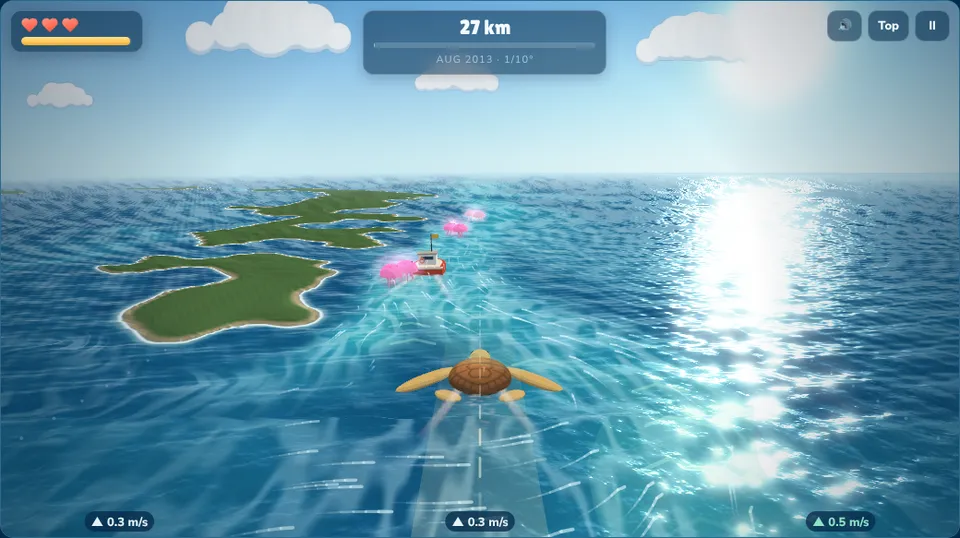
A baby sea turtle swimming along a bright current past green islands, with jellyfish and a boat ahead.

Current Rider

Swim a baby sea turtle along one of five great ocean currents, from Japan to Mexico or from the Great Barrier Reef to Sydney. Find the fast water, eat jellyfish, and dodge plastic, boats and ghost nets.

  • The sea along your route is the real ocean of 2013, every five days at 1/10°.
  • A buoy drifts beside you, so you can see what the current alone would do.
  • Plays in any browser, on a phone or a computer.
Play Current Rider

The Android app is coming to Google Play.
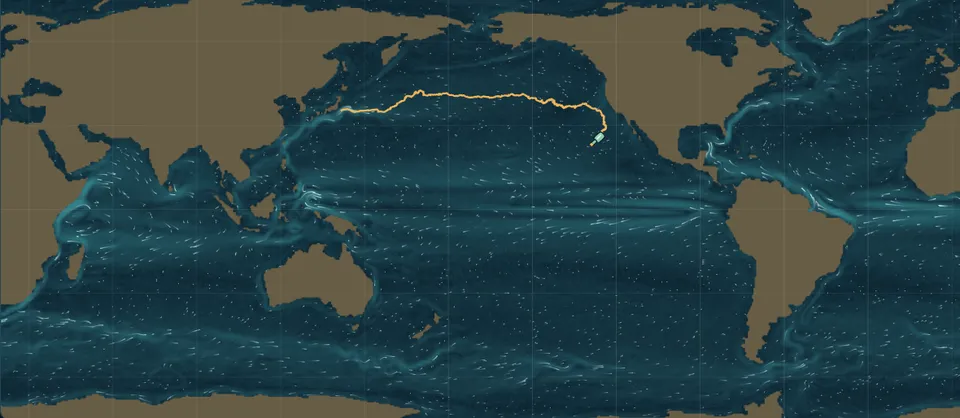
A world map of ocean currents with a bottle's path drifting from Japan across the North Pacific.

Message in a Bottle

Tap anywhere at sea to throw a bottle, then watch where the currents and winds carry it. Pick the year you were born, an El Niño year, or recreate the famous spill of bath toys in the Pacific.

  • Real currents and winds for every year from 1981 to 2020.
  • Challenges, a daily throw, and a logbook of every coast your bottles reach.
  • Plays in any browser, on a phone or a computer.
Play Message in a Bottle

Why “Geostroph”?

Over most of the ocean, the big currents are held in a balance. Where the sea surface stands higher, water is pushed downhill, and the Earth's spin turns it aside by just as much. So the water does not run downhill at all: it flows around the high, along lines of equal sea level.

Oceanographers call this geostrophic flow. The Gulf Stream and the Kuroshio flow this way, and every game here is built on currents shaped by it.

Geostrophic balance A hill of higher sea level drawn as rings. At the edge of the hill, the push downhill points outward, the turn from the Earth's spin points inward, and the current flows along the ring between them. higher sea level push downhill turn from the Earth's spin the current flows along the ring